
Basic detection, $200–$400
Straightforward jobs: a limited pipe run, good access, the leak confirmed and marked.
The water bill knows something you don’t. Somewhere under a slab or behind a wall in Forest Lodge, a pipe is quietly feeding the ground, and finding it with instruments instead of a jackhammer is the difference between lifting three tiles and gutting a bathroom. We locate to centimetres, then repair through one deliberate hole.
Every concealed leak makes three things: a sound, a temperature difference, and a pressure drop. The gear reads all three. Acoustic equipment listens for the specific frequency of water escaping under pressure and gets louder as we track along the line; thermal imaging paints the wet path through a wall or the warm plume of a leaking hot line under a slab; and isolating sections of pipework against a pressure gauge proves exactly which run is losing water and which is sound.
Cross-referenced, they put an X on the floor within centimetres. That precision is the entire point, the difference between lifting three tiles and re-tiling a bathroom. It matters double under Forest Lodge’s older homes, where pipes wander in ways no plan ever recorded, and the "obvious" place to dig is reliably wrong.

The tight, low-lying streets near Blackwattle Bay struggle in heavy rain, pushing runoff through ageing stormwater pits that choke and overflow.
Close to the water the ground is frequently wet regardless of any plumbing fault, which removes the most obvious diagnostic anybody has. Damp subfloor, moisture in the slab edge and standing water in a trench prove nothing here.
So detection near the water leans on isolation and the meter rather than observation, and on tracer gas where a leak is genuinely hidden by ambient groundwater.
Forest Lodge’s Victorian terraces largely still run earthenware pipes that crack and shift with age, opening the door to roots and recurring blockages.
Older homes are a record of everyone who has worked on them. Original runs, a post-war bathroom teed in somewhere unexpected, a laundry added in the sixties, and nothing documented.
That is why detection on a heritage-era property starts by establishing where the pipes actually go. Tracing the layout is half the job and it is the half that prevents opening the wrong wall.
A cracked earthenware line leaking into its own trench washes out the bedding supporting it. Losing support, the pipe sags; sagging, it holds water; holding water, it collects solids and eventually blocks.
Forest Lodge is a small, dense inner pocket of Sydney’s Inner West (postcode 2037), sitting right beside Glebe and within easy reach of the University of Sydney. Its narrow, tree-lined streets are packed with Victorian terraces, and much of the original clay pipework is still in the ground, which is exactly why we get called out here so often.
Which is why a drain that has begun to block regularly and a drain that is leaking are frequently the same drain at different stages. Finding it early is considerably cheaper than finding it once it has collapsed.
Corrosion works faster in humid, salt-carrying air, and the parts that fail earliest are the small ones: tap bodies, external fittings, and the connections around a hot water unit.
Many of the leaks we find on properties near the water are not in the pipework at all but at a fitting that has been quietly corroding in plain sight. They are also the cheapest to put right, if found before they let go.
Older houses have rising damp, failed flashings, blocked subfloor vents and perished mortar, all of which produce symptoms that look exactly like a leak.
Establishing which one you have is worth doing before any pipe is repaired. A moisture profile that peaks at floor level and falls with height points at rising damp; one that peaks at a fixture or a pipe run points at plumbing.
Straightforward jobs: a limited pipe run, good access, the leak confirmed and marked.
The standard concealed-leak hunt with the full kit on site, acoustic, thermal, pressure testing.
Long pipe runs, poor access or multiple leaks add gauge-and-listen time past the first hour.
Deep slab lines and complex multi-storey tracing sit at the top of the Sydney range.
Detection tells you exactly what the repair involves, so the repair quote is built on evidence. One crew does both, no handover, no second call-out fee.
The comparison to hold onto: exploratory demolition costs more than detection before its first guess is even wrong. Figures here are indicative of the 2026 Sydney market rather than a quote from us, you get your own number as a fixed price before any work starts.

The meter test, done properly, plus your bills and history. If the evidence says no supply leak, you hear that, not a bill for finding nothing.
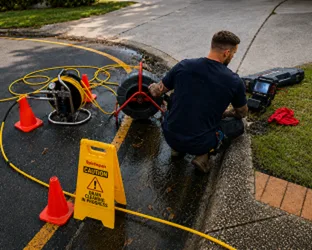
Pressure-testing the pipework in sections, hot against cold, line by line, corners the leak into one run before any listening starts.

Acoustic gear and thermal imaging along the guilty run until the readings converge. The mark on the floor is where the repair happens, centimetres, not metres.

Access exactly at the mark, the failed section repaired, pressure-tested, closed up. If the line's condition says reroute instead of repair, you get both numbers first.
Then the leak is real and already on the clock. Book the detection before it surfaces somewhere expensive.
Instruments, evidence, one precise repair: and a bill that goes back to normal.

Leave your details and our local Forest Lodge team will call you back fast.