
Common repairs, $150–$600
Elements, thermostats, thermocouples, relief valves: the parts that actually fail, fixed in a single visit. Most no-hot-water calls land here.
Cold water at 6am feels terminal, but the autopsy usually finds a $40 part, not a dead system. We test before we talk replacements, carry the common failures on the van, and put Forest Lodge households back under hot showers the same day, saving the new-system quote for tanks that have honestly earned one.
The hot water trade has a thumb on the scale: a replacement invoices ten times a thermostat, and the customer is standing in cold water wanting it over. So "needs a new system" gets said a lot to people whose element died. The actual failure list is mundane and mostly cheap, elements and thermostats on electric tanks, thermocouples and pilots on gas, sensors and flow faults behind a continuous-flow unit’s error code.
Our order of operations in Forest Lodge never changes: instruments first. Elements get metered, gas sequences get checked, codes get read. When the verdict is a part, you get the part today. When a cylinder is genuinely finished, weeping seams, hot-side rust, double-digit age meeting a big repair: you get the repair quote and the replacement quote side by side with our reasoning, and the choice stays where it belongs: with you.
The ABS 2021 Census recorded 61.6% of occupied dwellings in Forest Lodge as flats or apartments, against 65.6% of NSW dwellings being separate houses. That is why most hot water calls here reach a cupboard unit, a balcony install or a central plant serving the whole block, rather than a tank in a yard.
Every storage unit has a relief valve drain line, and on a property with limited fall or a low-lying yard, that line frequently discharges somewhere it should not, against a wall, into a garden bed, or into a pit that backs up in heavy rain.
It matters because a relief line that cannot discharge freely is a safety device that cannot do its job. It is a quick thing to check and a cheap thing to correct.
Efficient replacements are often simply unavailable in a block. energy.gov.au notes gas heaters are usually installed outdoors because of venting requirements, and heat pumps need open air to draw from, neither of which a third-floor cupboard offers.
A period home has almost never got its original hot water arrangement. What it has is whatever was fitted at the last renovation, connected into pipework of a completely different era, and that junction is frequently where problems start.
Galvanised pipe feeding a modern unit will keep delivering rust and restricting flow regardless of how new the heater is. Replacing the unit without addressing the feed solves less than people expect.
Units mounted outside in a humid, water-adjacent setting corrode at the casing and the fittings well before the cylinder itself gives up. The failure looks sudden and has usually been visible for a year to anyone who looked.
A five-minute look at the top fittings and the base of the casing once a year is the entire maintenance requirement, and it reliably converts an emergency into a planned replacement.
Hot water systems give more notice than they get credit for. Rusty or discoloured hot water, a recovery time that has quietly doubled, a relief valve that has started weeping continuously, banging or rumbling from the tank, or damp around the base.
Any one of those is worth a look. Together they are a unit telling you to choose the replacement date yourself rather than have it chosen on a winter morning.
No hot water is listed among urgent repairs under NSW residential tenancy law. The landlord or agent must arrange it promptly, and your first call is to them.
If they cannot be reached, tenants can arrange urgent repairs up to a legislated limit and seek reimbursement. Keep the invoice and a record of your attempts to contact them, we itemise ours with times so it holds up.
A temperature and pressure relief valve is meant to release a small amount of water during a heating cycle. A continuous drip is not normal.
It usually means the valve is worn or the incoming pressure is too high, and both are inexpensive to correct. Left alone, a weeping valve wastes a surprising volume of heated water and eventually seizes, at which point it is no longer a safety device.
Elements, thermostats, thermocouples, relief valves: the parts that actually fail, fixed in a single visit. Most no-hot-water calls land here.
Gas valves, control boards on continuous-flow units, and bigger jobs on systems still worth the spend.
Like-for-like replacement when the tank is done. Gas storage runs $1,200–$2,200 installed.
Endless hot water, no tank to rust, and it frees the space the cylinder occupied.
After rebates. Costs the least to run of the lot, worth the numbers conversation on any replacement, not just the green one.
You see the repair number and the replacement number together, the decision is yours, made with both in hand. Figures here are indicative of the 2026 Sydney market rather than a quote from us, you get your own number as a fixed price before any work starts.

System type, age and symptom over the phone lets us load the probable part before leaving, that is what makes same-day genuinely same-day.
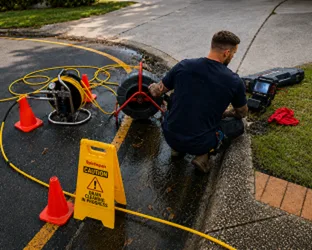
Multimeter on elements, sequence checks on gas, codes read on continuous flow. The diagnosis comes off the meter, never off a sales target.
Repairable means repaired now. End-of-life means the repair and replacement prices side by side, with our reasoning, then your call, unhurried.
Replacements go in with tempering valve, relief drain and compliant connections, old unit gone, and hot water flowing: usually the same day.
Call before 10am and in most cases the water is hot again tonight. Describe the system and we bring the likely fix on the van.
Diagnosis first, honest numbers second, hot water third: usually all on the same day.

Leave your details and our local Forest Lodge team will call you back fast.